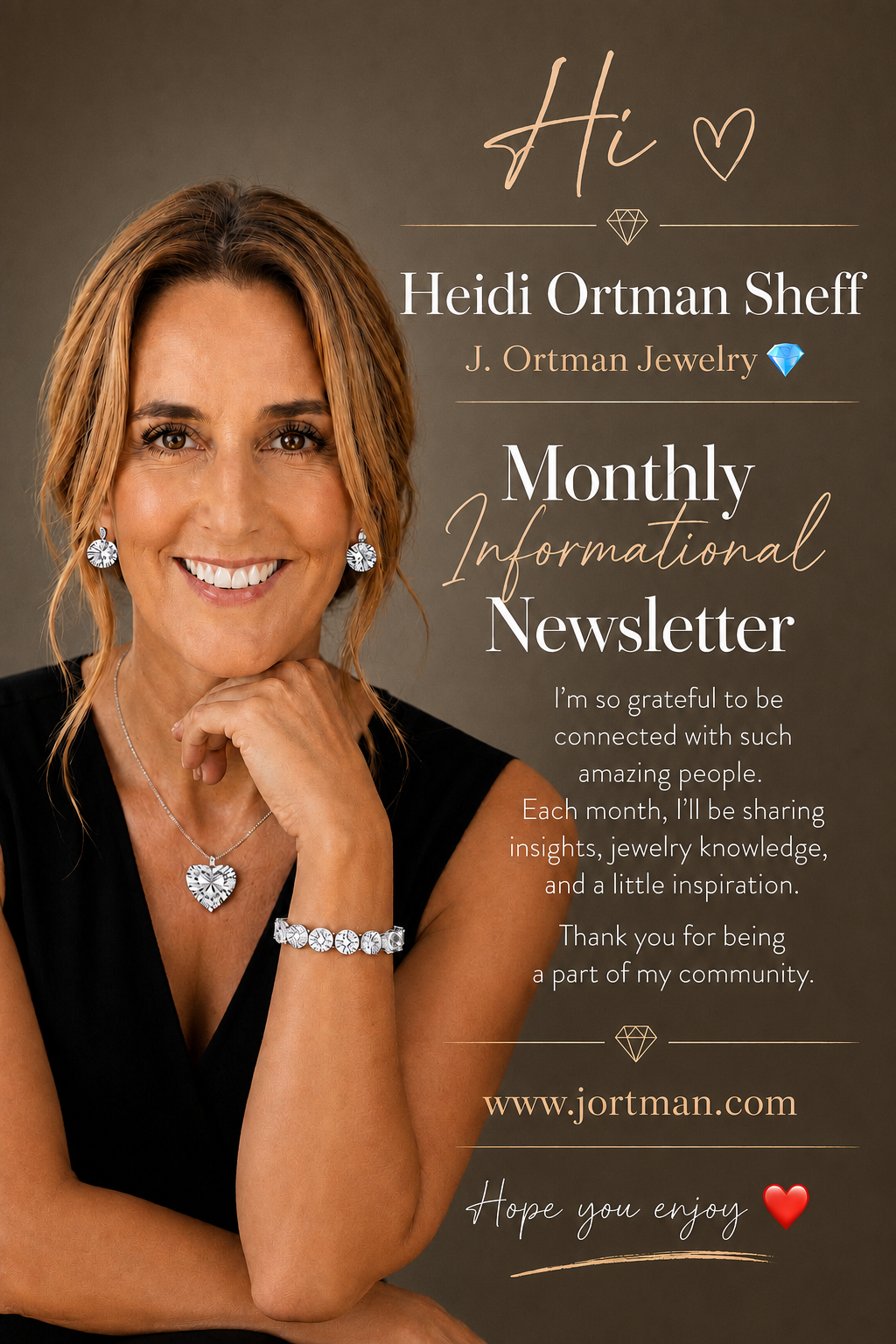
By Heidi Ortman Sheff | J. Ortman Jewelry
Buying diamond jewelry should be exciting—not confusing. Whether you’re shopping for an engagement ring, anniversary gift, diamond studs, a tennis bracelet, custom-designed jewelry, or a meaningful family heirloom, I believe the best decisions come from education rather than sales pressure.
As a fourth-generation jeweler with more than 40 years of experience, my goal has always been to help my clients understand what truly matters so they can purchase with confidence. Every client is different, every budget is different, and every occasion is different. The right diamond is the one that best fits your lifestyle, priorities, taste, and budget.
One of the questions I’m asked most often is whether to choose a natural or a lab-grown diamond. The answer surprises many people—both are real diamonds. They are chemically, physically, and optically identical. The only difference is how they were created.
Natural diamonds formed over billions of years beneath the Earth’s surface. Lab-grown diamonds are created using advanced technology that replicates the same growing process. Neither is automatically better—the best choice depends entirely on your goals.
I typically recommend natural diamonds when someone wants to create a family heirloom or is purchasing a rare, GIA-certified gem-quality diamond of approximately five carats or larger.
For engagement rings, anniversary gifts, tennis bracelets, earrings, pendants, and most fine jewelry, lab-grown diamonds offer extraordinary beauty and value. Today they generally cost about 90% less than comparable natural diamonds, allowing many clients to purchase a larger or finer-quality diamond while staying comfortably within budget.
Whether you choose a natural or lab-grown diamond, understanding the 4 Cs will help you make a smarter purchase.
I also believe shape deserves equal attention. Round, Oval, Cushion, Emerald Cut, Pear, Radiant, Marquise, Princess, Asscher, and Heart shapes each have their own personality. The most beautiful diamond is one with the right combination of cut, color, clarity, carat weight, and shape.
Most diamond jewelry should be purchased to celebrate life’s milestones and become treasured family heirlooms—not because you expect it to appreciate financially.
If your goal is long-term collectibility, focus on truly rare pieces such as GIA-certified natural diamonds of approximately 5 carats or larger, Natural Fancy Color Diamonds, Burma Rubies, Kashmir Sapphires, Colombian Emeralds, and rare vintage signed jewelry by renowned houses such as Cartier, Van Cleef & Arpels, Harry Winston, Tiffany & Co., and Bulgari.
I believe buying fine jewelry should be personal, enjoyable, and pressure-free. I take the time to educate my clients, source exceptional diamonds and gemstones from trusted suppliers around the world, and help you choose a piece you’ll love for years to come.
Thank you for taking the time to read this guide. I hope it gives you the confidence to make informed decisions whenever you’re buying fine jewelry. If you ever have questions—even if you’re simply looking for honest advice—I’m always happy to help.
Heidi Ortman Sheff
J. Ortman Jewelry
914-643-1553
heidi@jortman.com
www.jortman.com